Extreme heat a ‘silent killer’ in poorest Vancouver areas
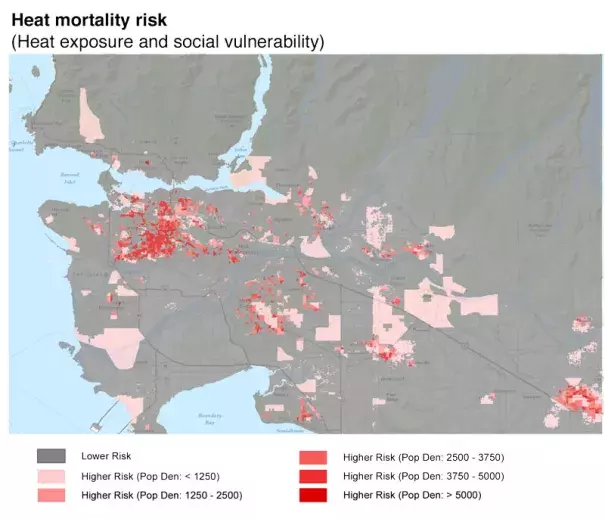
[M]ore economically vulnerable neighbourhoods in Metro Vancouver have the highest death rates during extreme heat waves, [a new study suggests].
The study used an index of economic vulnerability developed with the region’s chief medical officers — the Vancouver Area Neighborhood Deprivation Index (VANDIX) — and mapped it over the hottest-temperature areas, known as “urban heat islands,” from 1998 to 2014. There is no doubt the weather is getting hotter; April was the hottest it's been since at least 1981 in Vancouver, and last summer saw temperatures sizzle to their highest in recorded history. Both of those year-after-year records shattered the previous record temperatures of 2014.
In the hottest year overall, 2009, a weeklong heat wave where the humidex approached 35C coincided with 110 deaths above the normal.

Related Content